Why search may need new management

PERFORMANCE
There’s a new high-stakes marketing role being hired by major brands across the globe. Apple recently filled the post in its Cupertino HQ. Adobe offered as much as $197,000 (£150,000) a year for the position in its San Francisco office. In Paris, L’Oréal is outsourcing the work. And Hawksford, a fund manager, is advertising for the role in Dubai.
What position are they hiring for? The generative-engine optimisation (GEO) manager, the successor to the search-engine optimisation (SEO) manager. Now a standard marketing hire, the SEO manager works to improve their company’s performance in Google Search rankings, landing coveted firstpage results and driving traffic and business to the website.
Newly minted GEO managers, by contrast, are tasked with making their firm stand out in generative AI results, strategising the best words, data, tone, website infrastructure and social media content to build and manage their brand’s reputation with the bots.
GEO can't be seen as a performance channel. It must be seen as a brand-building channel initially
The job has emerged because consumers are increasingly relying on AI to guide their search and buying behaviour online. Some analysts project that GenAI chatbots such as ChatGPT will overtake Google Search as the primary online search method by 2030.
Currently, many companies are delegating GEO work to their public relations partners. Sabina Mack is the head of digital for Palm Digital, a PR agency, whose clients include the global hotel chain Hyatt and the US chocolate brand Hershey.
Mack says in the past six months GEO has become a hot topic in brand-marketing conversations. “Clients are starting to mention it now, whereas earlier this year nobody even knew what to call it,” she says.
In-house marketers and agency partners are learning as they go. Some digital marketers are nervously asking how to perform the role on industry forums. And, Mack says, mastering chatbot relevancy was the talk of October’s brightonSEO event, one of the world’s largest search-marketing conferences.
Performance metrics for GEO managers are opaque. SEO managers can use Google Analytics to demonstrate how their work helps to increase traffic to the company website or tally the clicks a new blog post has generated. For GEO managers, however, success is still being defined.
“We currently can't see [brand website traffic] that has come from being featured in GenAI results,” Mack says. “That's a piece of the puzzle we are waiting for Google to implement.”
Another challenge for a GEO manager is that GenAI owners are keeping schtum on how exactly it all works. The methodologies deciding whether a brand or a product rank in a ChatGPT response, or are included in Gemini’s AI overview at the top of a Google page, are not disclosed.
But Mack says brands that exhibit strong digital and business fundamentals will be the ones to win GenAI’s attention.
Ensuring the brand website is well built and technically sound is key, she says. It must demonstrate with tangible evidence that the business holds authority in its field. Firms would also benefit from external content online that says the brand is worth including in GenAI results.
This is good news for small businesses that lack large marketing budgets. Unlike traditional search rankings, which can be purchased through Google Ads, GenAI rewards good technical foundations, not advertising spend, Mack explains. “You can't just appear in position one in GenAI search results because you've spent £2,000 to be there.”
Mack adds: “Another key benefit of GenAI search currently not being monetised is that people are trusting its results more [over ad- enhanced results].”
However, experts say the window of opportunity for brands to optimise for GEO before it becomes a paid-for marketing channel is small.
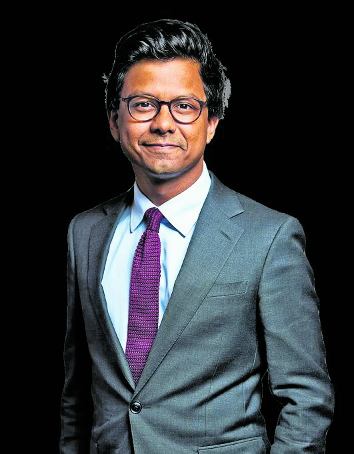
Thierry Lalande is the CEO of Ipsos Synthesio GEO, which tracks and analyses GenAI results for its clients and helps them improve their rankings.
“Businesses will soon be able to influence their GenAI rankings, as they already can with SEO,” says Lalande. This will likely be through a combination of paid-for advertising – the GEO version of Google Ads – and better knowledge of how GenAI rankings work.
Mack agrees: “It is predicted in the industry that by the end of 2026, ChatGPT will roll out its own ad platform. OpenAI has already said it's in the works.”
GenAI shopping is the next logical step. In October 2025, PayPal agreed a partnership with OpenAI to integrate its digital wallet in ChatGPT. The same month, a ‘buy now’ option was enabled for the online marketplace Etsy in ChatGPT search results.
“I wouldn't be surprised if GenAI providers roll out their own booking platforms in 2026,” Mack says. This could revolutionise industries such as hospitality and travel.
Businesses must prepare for rapid changes in the way people browse, research and buy online, says Lalande. “Brands that make GEO a priority now could take a very strong share of voice in the LLMs if they can understand the system.”
Looking further ahead, GEO could reshape company marketing teams. Large businesses, Lalande says, will need teams of people to analyse GenAI data and act on it.
Both Lalande and Mack caution brands to be realistic: don't expect instant, quantifiable results from GEO efforts. “It's a new field. Everyone is learning,” says Lalande.
Mack adds: “Because it is so new, GEO can't be seen as a performance channel. It must be seen as a brand-building channel initially.”
For marketing professionals, the GEO role may present an opportunity for rewarding, AI-proof work in a tough jobs market – and for the businesses that hire them, a chance to be early out the gates before GenAI becomes a global sales channel.


No comments:
Post a Comment