It’s a rip off! The shamelessness of plagiarism
Strikingly Similar
Plagiarism and Appropriation from Chaucer to Chatbots
by Roger Kreuz
CUP £25 pp256
Anyone who believes that writers are basically decent human beings should look away now. On the evidence of this book, many of them are about as honest as someone wearing a striped jumper and carrying a bag marked “SWAG”. For example, in 1956 Anthony Hodgson’s mystery novel The Golden Ballast was revealed to be a perfect copy of Eliot Reed’s Tender to Danger, published five years previously.
This isn’t an exclusively modern phenomenon. As Roger Kreuz points out in his engagingly fact-packed survey of plagiarism through the ages, the Roman poet Horace accused a contemporary of making his writing beautiful with “stolen feathers”, while Martial invented the term “plagiarist” when he compared a sticky-fingered fellow poet to a plagiario, meaning a kidnapper of slaves or children.
Later Chaucer and Shakespeare relied heavily on existing printed sources for
their plots, while Dickens was infuriated early in his career by hack writers who churned out knock-off versions of his novels with titles like Oliver Twiss and Nicholas Nickelbery that were about as authentic as a modern street-seller’s Guchi or Armany handbags.
Nor are imaginative writers the only culprits. Politicians from Disraeli to Biden have sought to ingratiate themselves with voters by echoing those who have already triumphed at the ballot box. In 2016 Melania Trump’s speech to the Republican National Convention alternately riffed off and ripped off Michelle Obama’s 2008 Democratic Convention address.
Sometimes politicians have even used words written by professional storytellers. Tony Blair’s 2010 memoir A Journey: My Political Life recounted how during his first meeting with the Queen she told him, “You are my tenth prime minister”, which also happened to be a line from Peter Morgan’s 2006 film The Queen.
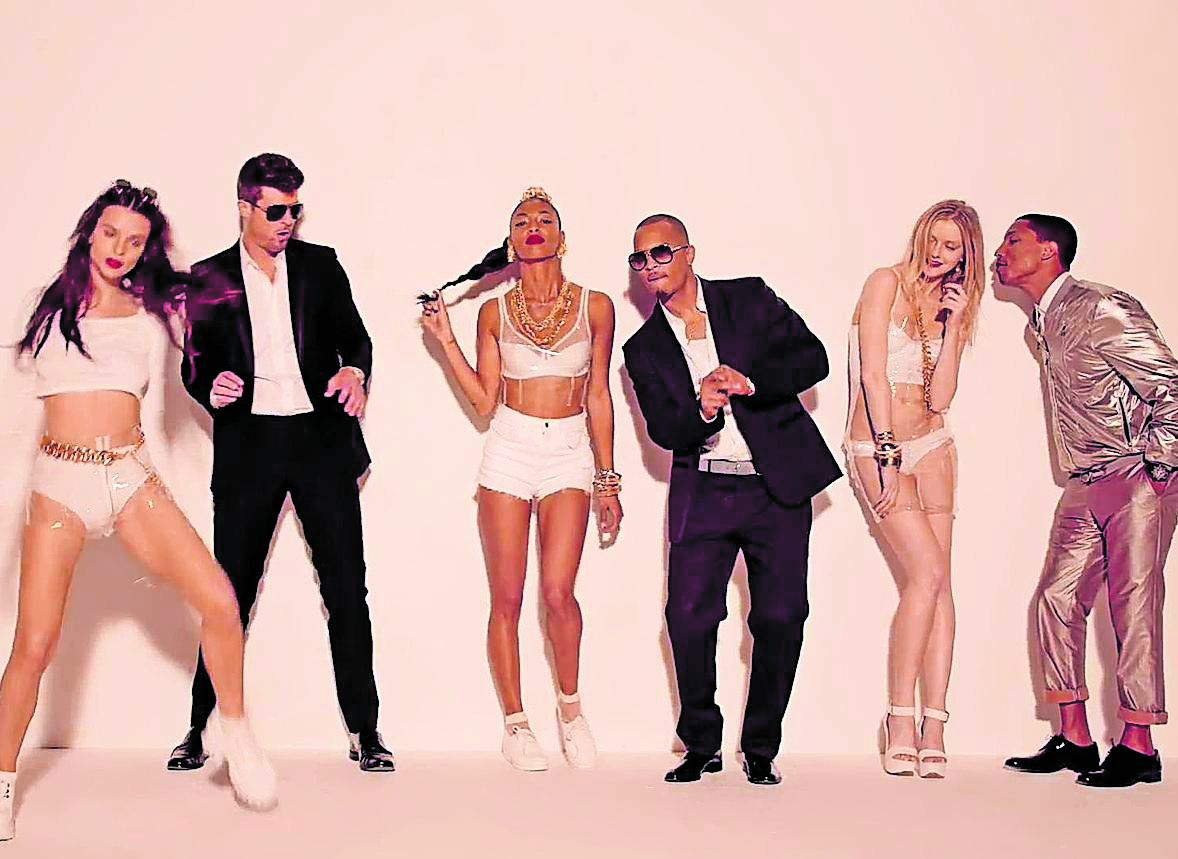
Musicians are equally likely to decide that they might boost their chances of making a hit record if they use fragments of melody or chord sequences that have already snagged on a listener’s ears. In 2015 the estate of Marvin Gaye was awarded $7.3 million in damages after suing Robin Thicke and Pharrell Williams, alleging a strong resemblance between their 2013 hit Blurred Lines and Gaye’s 1977 song Got to Give It Up.
As is often the case, the song title seemed to confess what the artists strenuously denied.
However different they are in other respects, what connects all these examples is the assumption that a really good idea is worth having — or at least expressing — more than once. In fact, wherever you look in human history there are so many examples of this sort of cultural déjà vu that a creative act can seem to require nothing more than a pair of scissors and a pot of glue.
The World Association of Medical Editors suggests that it occurs when six consecutive words are copied without attribution. But musical parallels are trickier to pin down. After Ed Sheeran successfully defended himself against a lawsuit alleging that his song Shape of You had drawn on Sami Switch’s Oh Why, he pointed out that coincidences were bound to happen when 60,000 songs were being released every day onSpotify “and there’s only 12 notes that are available”.
Other songwriters have worried that their memories were so sticky they might have picked up an earlier musical fragment without even noticing. After Paul McCartney awoke one morning in 1963 with the melody of Yesterday echoing around in his head, he spent the next month asking various people in the music industry if they’d heard it before.
“Eventually it became like handing something in to the police,” he explained.
“I thought if no one claimed it after a few weeks, then I could have it.
”Dickens was infuriated with a knock-off novel called Oliver Twissfew
The author of this study is an American psychologist and he has some interesting things to say about whatmight motivate someone to pass off another person’s work as their own, from an act of homage to the assumption that whatever exists is fair game for being plundered or reworked.
When Bob Dylan was accused of plagiarising parts of his intriguingly titled 2001 album Love and Theft, he responded by saying that “all my stuff comes out of the folk tradition” and “you make everything yours”.
Kreuz also points out that unjustified accusations of plagiarism can stall careers and blight lives. But most of his book is an anthology of stories taken (with proper acknowledgment) from The New York Times, and inevitably this leaves some gaps.
For example, he mentions the zeitgeist but not the tricky issue of phrases that have floated free from their original context and become part of the cultural atmosphere everyone breathes. When Samuel Beckett began his 1938 novel Murphy with, “The sun shone, having no alternative, upon the nothing new”, he wasn’t plagiarising Ecclesiastes (“The thing that hath been, it is that which shall be … and there is no new thing under the sun”) because the phrase “nothing new under the sun” was already a common proverb by the time the King James translators put their own stamp on it. Nor does Kreuz engage with the postmodern assumption that language is like a giant spider’s web that cannot be touched at any point without the whole structure quivering into life.
What he does show, in a particularly eye-opening section of his book, is how few people can recognise glaringly obvious examples of plagiarism, and even when they do how little they care. In 2007 a theatre director submitted two chapters of a historical novel to 18 editors and asked if they would be interested in publishing it. He received plenty of rejection slips but only one editor pointed out that the work was already in print and was really quite successful.It was called Pride and Prejudice.



No comments:
Post a Comment